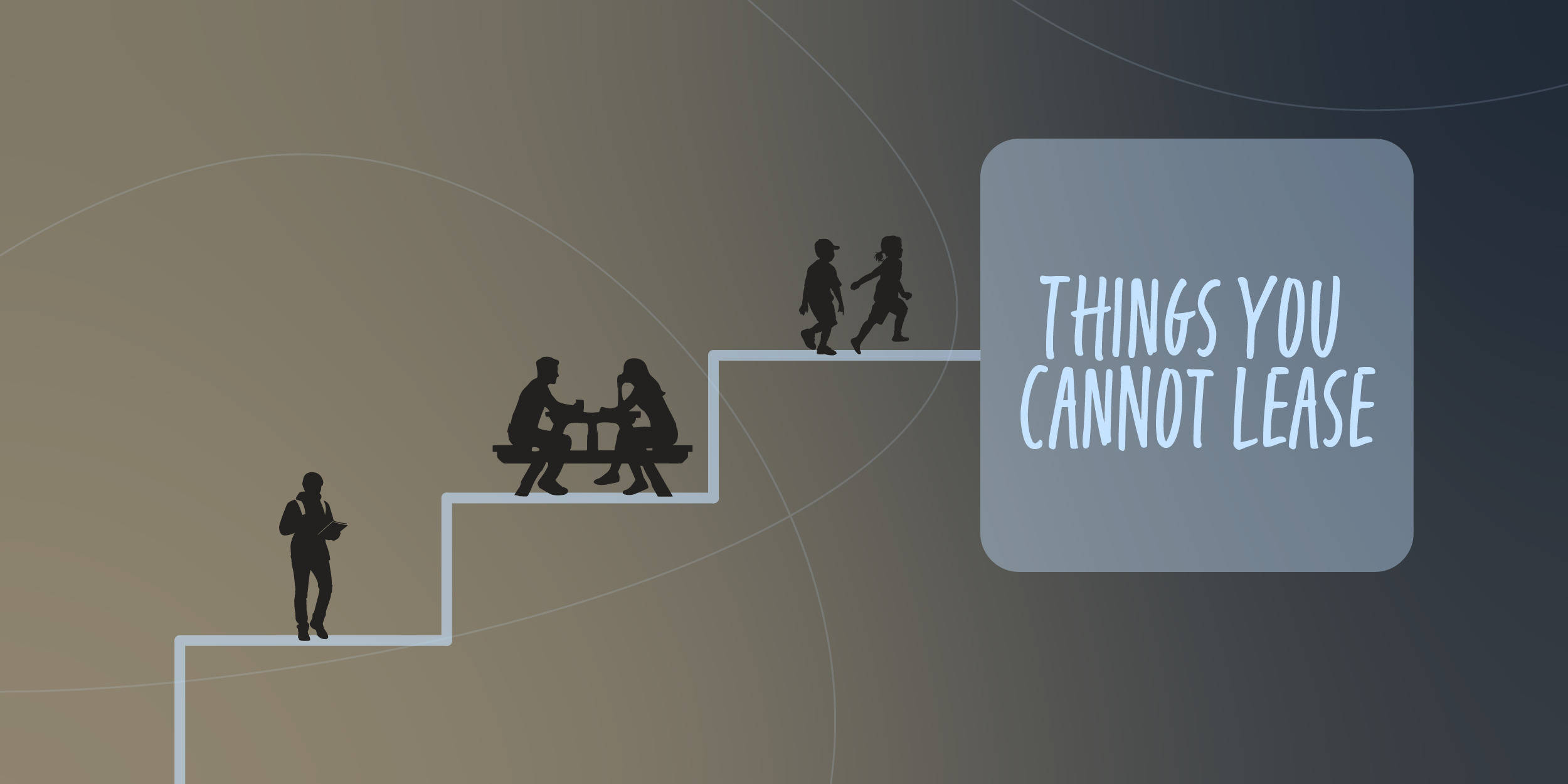
An exploration in five parts.
Intro - Live, Work, Play
A large conference room, March 2023
At the trough of the real estate hangover from COVID-19 and remote work, I helped convene a futuring workshop where various leaders gathered to push themselves out of the grind of daily challenges to imagine an optimistic future for DC's downtown. We split into small groups to focus on specific areas of downtown. At the table I was leading, one participant suggested that our area should focus on developing a "live, work, play" district. I had heard this phrase so many times before in my planning and real estate development work that it almost passed by unnoticed.
Live. Work. Play.
Together they are a more fun version of the more technical term "mixed-use." And given that I spent most of my 20s and 30s doing those three things, it just felt obvious as not just a marketing ploy, but a critical goal, for all sorts of real estate efforts, public and private. The goal of moving from a primary commercial downtown to a more mixed-use one was an important goal. The pre-COVID downtown did do "work" and "play" pretty well, but struggled with the "live." The comment felt important and clear, perhaps even self-evident.
Yet, for some reason, at this moment and in this place, the term caught me. Just like when you start thinking about your breathing, this phrase was something I usually took for granted but was now a focus in my mind I couldn't stop thinking about. Certainly we needed more people living downtown. And one must work to play and play to live. As a real estate goal, this made sense, given all three of those things involve selling or leasing real estate.
But as a goal for a place, it now felt brittle. Perhaps it was because I was approaching my 40s and beginning to see that life was more than working, playing, and hanging out at home. Perhaps in the shadow of lockdowns and remote work, many of us were all assessing our priorities in life. Since that time, I've spent more time thinking about the trilogy. And I think it misses the humanity that makes a place more than buildings. Three examples highlight this gap.
One - Learn
A college campus, spring
Imagine a scene on a college campus. But more importantly, capture the vibe. There are likely lots of people walking around, various sounds of activities in the background, and lots of posters for various events. College campuses, which can be in rural, suburban, and urban locations, all have an impact on the life of the place. Regardless, it creates a unique shared space all rooted in learning. The spaces they create, both inside and outside of buildings, enrich not only their students and professors, but support communities that engage through lectures, events, alumni networks and sports.
In fact, our visioning session surfaced this reality. At the same time as offices hemorrhaged workers, leaving empty sidewalks and Metro stations, there was a growing interest in learning in DC's downtown. Local universities like George Washington and Georgetown were expanding as were universities from across the country with satellite locations for study-abroad programs.
Of course, learning doesn't just happen at the scale of higher ed institutions. K12 schools define the spaces around them. I have already thought about the rush of school dropoff, but there's also the slow crescendo and decrescendo of a Friday night football game. Meanwhile, the National Building Museum's programming spills out of its cavernous halls into its lawn and Topiary Park outside of Columbus's central library teems with people at its annual book fair.
Two - Belong
MLK Jr. Library, DC's Central Library, Tuesday night
On an unremarkable Tuesday evening, 150 people of ages, races, and backgrounds gather at MLK Jr. library's central hall. There's a buzz of energy but also a sense of focus. People are separated into different tables, but there's still a connection across all of them. This is Mahjong Night at the DC Public Library. And while mahjong is a game people play, this night is about more than just playing. It's also about belonging.
DCPL recognizes the value of this in their recent strategic plan called IRL, which lists three strategic priorities: joy, belonging, resilience. In addition to the wisdom of following the rule of three, it sees that libraries serve a deeper human purpose of connection and building community. Of allowing people to belong. One can live, work, and play in a place without ever finding belonging there.
Libraries don't have a monopoly on this kind of connection. Places of worship are another important community anchor that meld physical, noncommercial spaces with a regular community.
The buildings that anchor learning and belonging (libraries, universities, places of worship) are among the most historic and iconic in our cities and towns. We design them to stand out along our streets and build them to last generations.
Three - Love
An outdoor beer garden, the coldest February day of 2021
It is freezing, but I grab a table in the outdoor heated tent, as the COVID vaccine is still not generally available, so indoor dining with strangers is still questionable. After I text her the table number, I see there's a "reserved" sign on the table, so I have to move out of the cover of the tent into the frigid cold. This does not bode well for a first date. When she arrives, she goes to the old, warmer, and now wrong table. We finally connect, but can't really see each other through the hats and scarves. So much for a seamless meet-cute.
Yet we try. As we settle into our drinks, the cold moves out of focus and our conversation takes the whole frame, creating our own world. Somehow we talk for hours on a freezing weeknight and quickly realize this is something special. Five years later, thanks in part to the public dining spaces created by COVID, we have a family rooted in our city.
Our places can root our love. Being together, whether it's in meeting a partner, spending time with family, or fostering friendships, needs to happen in a place. And our places are critical to sparking, fostering, and celebrating all of these types of love.
More than the other categories, love doesn't translate into a space that can be financed or leased. But it underlies our best places.
Coda - Learn, Belong, Love
Southeast Library, September 10, 2026
This September, all three came together in one building.
The Southeast Library, a Carnegie building, had been closed for two years of significant rehabilitation which included the creation of a new below-grade floor for children. For the last year or so, every time we went by with our son, we pointed out the construction. Like any three-year-old, he would invariably ask when he could go. When the answer came back as anything but "tomorrow," he would become exasperated and sometimes melt down.
So when the answer was finally "today," I had to take him after school. It's a party outside with balloons and clowns, but he books it for the gigantic kids space. Despite an area packed with kids and their grownups, he immediately spots the play tables with built-in train tracks. As he and the other kids of various ages negotiate who gets which train and avoid derailments and collisions, I chat with other parents, who I imagine I will be seeing here again. When it's time to go, he checks out a book about trains, of course.
Thanks for subscribing to my newsletter. You can find past editions here. I always welcome feedback at feedback@trueblood.city. Also, please forward to others you think may find it interesting.
|