Palaces for the Pros and the People
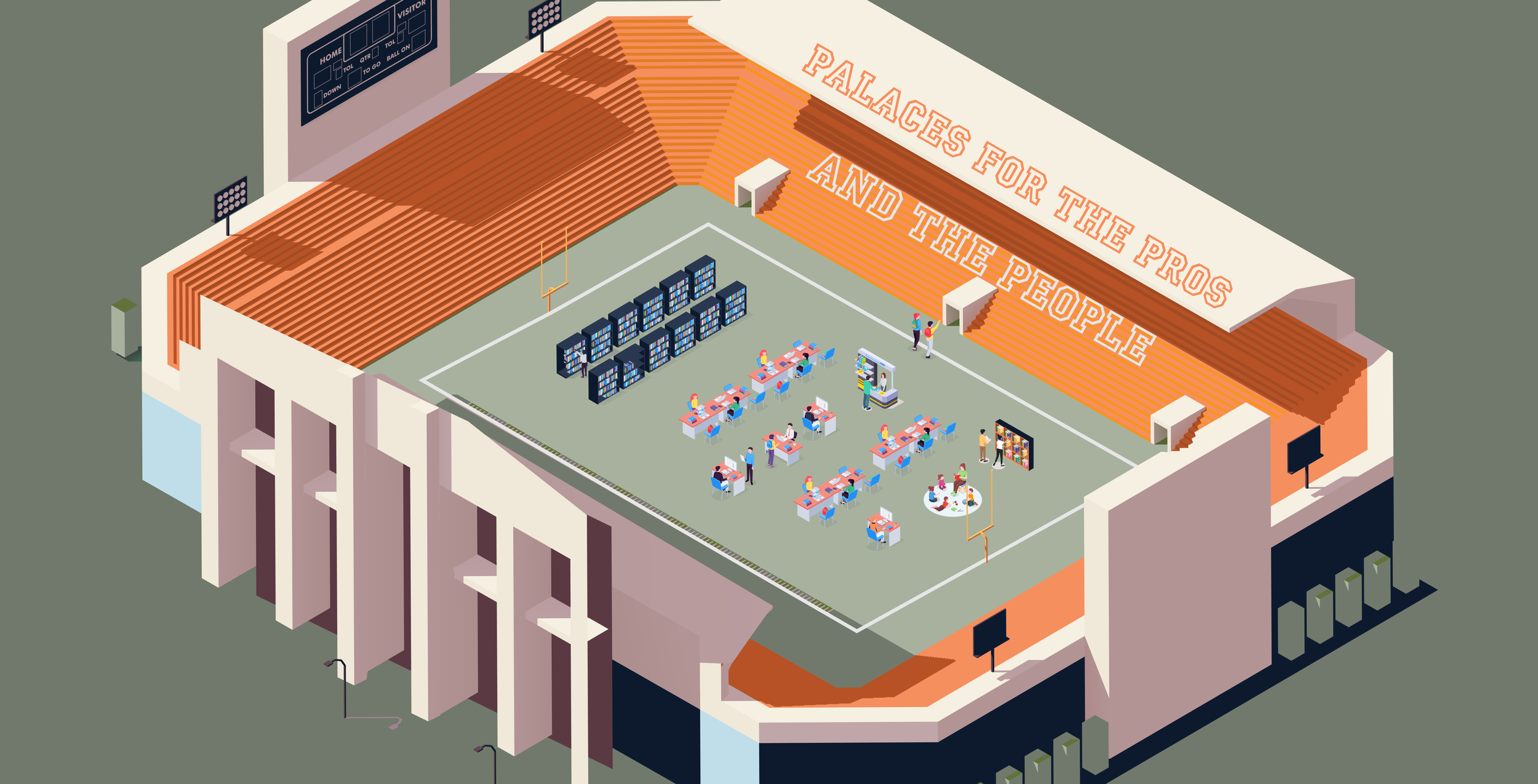
What can a stadium teach a library?
One of my life passions is riding my bike. I love the pace at which I get to see the world go by, whether it’s in the city or along farmland. It was along one of these amazingly refreshing early-spring rides that I rode by the former RFK Stadium site. I was disoriented to see that the hulking stadium had disappeared over the winter! It got me thinking about how quickly that effort has moved and the utter scale of it, especially when compared to efforts the DC Public Library is undertaking to build new libraries that look to take about the same amount of time, even with budgets with significantly fewer zeroes at the end.
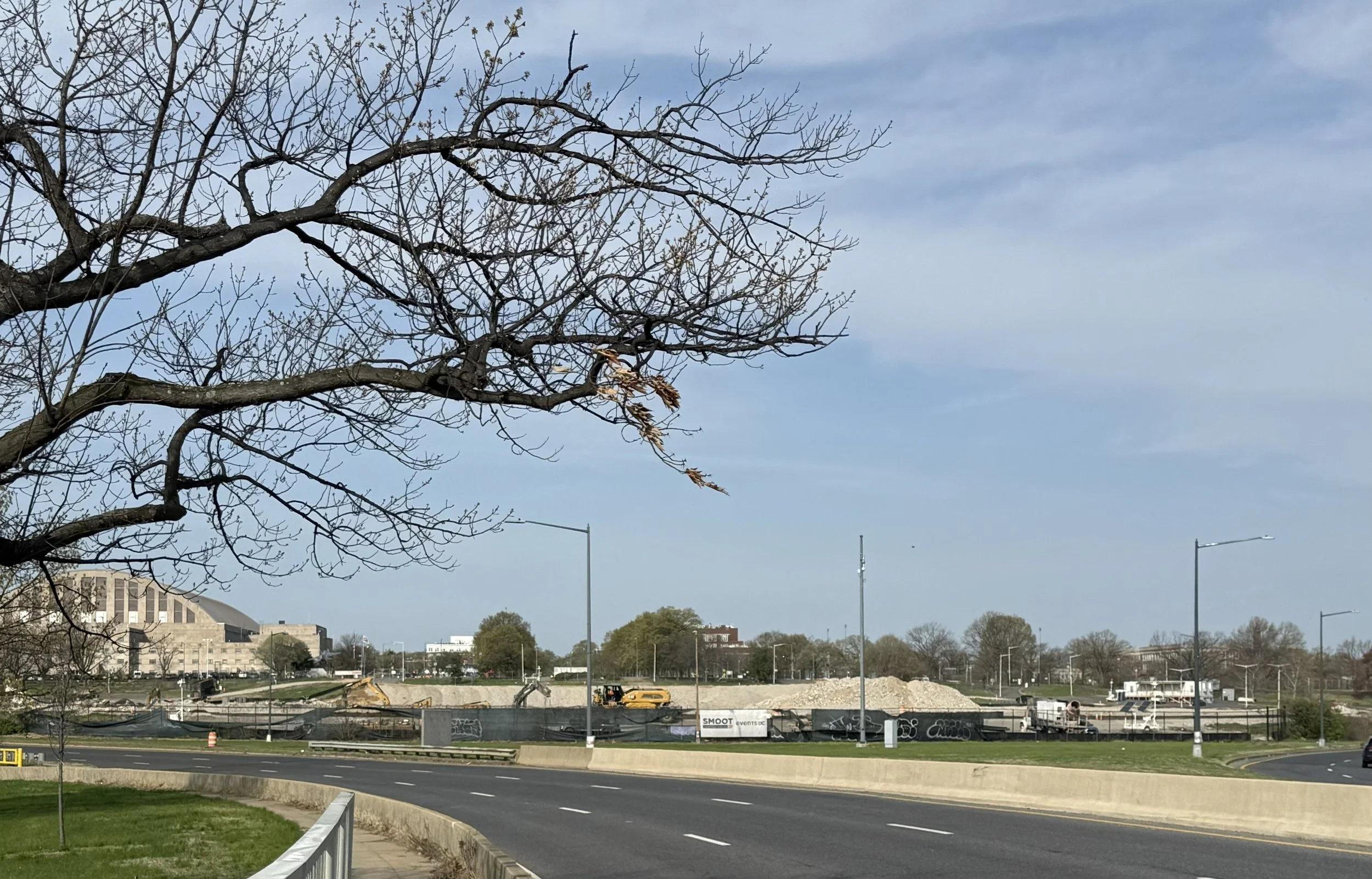
The site of the former RFK stadium as of April 2026, which was an icon in DC for many decades, as seen on a recent bike ride.
The Pros
Professional sports in DC excite many residents and policymakers, as evidenced by major recent projects including the renovation of the Capital One area for the hockey and basketball teams and the redevelopment of the RFK Campus for the return of the football team. The amount of money and time invested disappoints many others. I promise no hot takes on public subsidies for sports teams. But I also think the distaste many people, including lots of people in the urban policy realm, feel about professional sports may bias them against an opportunity to understand that passion and political energy. As we face growing social isolation, the continued growth of professional sports has important lessons that could be applied to other endeavors that are trying to bring people together in a physical space and create joy. Places like libraries.
At first blush, there is a lesson to be learned about a clear and constant focus on user experience. Professional sport stadiums have clearly mastered the arc of an experience, from the anticipation of arrival to the emotional release of departure and all the ways to spend money in between. Stadiums have also been forced to solve the problem of activating their large spaces between events. This is actually the inverse of libraries' challenge, which have a regular pace of engagement but often lack the big special events. Yet as I thought about these two different places, I realized the more intriguing comparison is around belonging.
I believe one of the most accessible forms of belonging in the United States is sports fandom. All you have to do is declare it. Granted, you can also buy gear, follow the team, purchase a bunch of subscriptions, and hiss at the rivals. Fandom is what economists call “non-rivalrous” as the amount you consume doesn’t reduce anyone else’s consumption. In fact, it may do the opposite as people convince those around them to become fans. And the belonging of this fandom is intimately tied to place. The Yankees and New York are inseparable. Could the Cowboys be anywhere other than Texas? No wonder sports stadiums are such intriguing investments for politicians.
The peak of fandom is attending the team’s game at their venue, which amps up the belonging through an in-person experience: the hats, jerseys, food, drink, and the pre- and post-game rituals. This all comes together to create a shared experience and human connection. How many places do we have left that bring together so many people from so many different backgrounds to share in a common, mostly joyous, experience?
The People
The challenge is translating the belonging from the loud, boisterous stadiums to the more unassuming and modest civic infrastructure. A more neighborhood-scale civic analog is the public school, which generates belonging almost automatically through recurring daily presence, shared age cohorts, and of course sports and arts events. Civic infrastructure like libraries are meant to be free and accessible to all, without the required cadence, shared cohorts, or compulsory band concert attendance. In this way, they are designed to welcome everyone equally such that there is no insider or outsider. There are no rivals at a library (despite the running Parks & Recreation jokes to the contrary).
And yet, I’ve seen how neighborhood branches have their own identity and fandom that generates a different type of belonging. There may not be as much cheering, but there are the quiet reading areas, the (not-so-quiet) children’s storytime, and the background sounds of clicking keyboards.
The belonging that libraries generate is harder won than fandom at a stadium. Libraries invite learning, self-betterment, and reflection, which asks something different from us than going and enjoying a game. But this type of belonging deserves attention because it isn't purchased or compelled. The senior who comes every Tuesday morning, the kid who knows where the graphic novels live, or the teenager who just wants somewhere to be without being asked why, these are forms of belonging that stadiums can't manufacture and schools can't replicate. The question for all of us is how do we identify and nurture belonging in a civic institution that lacks the inherent drama (and budget) of a pro sports team?
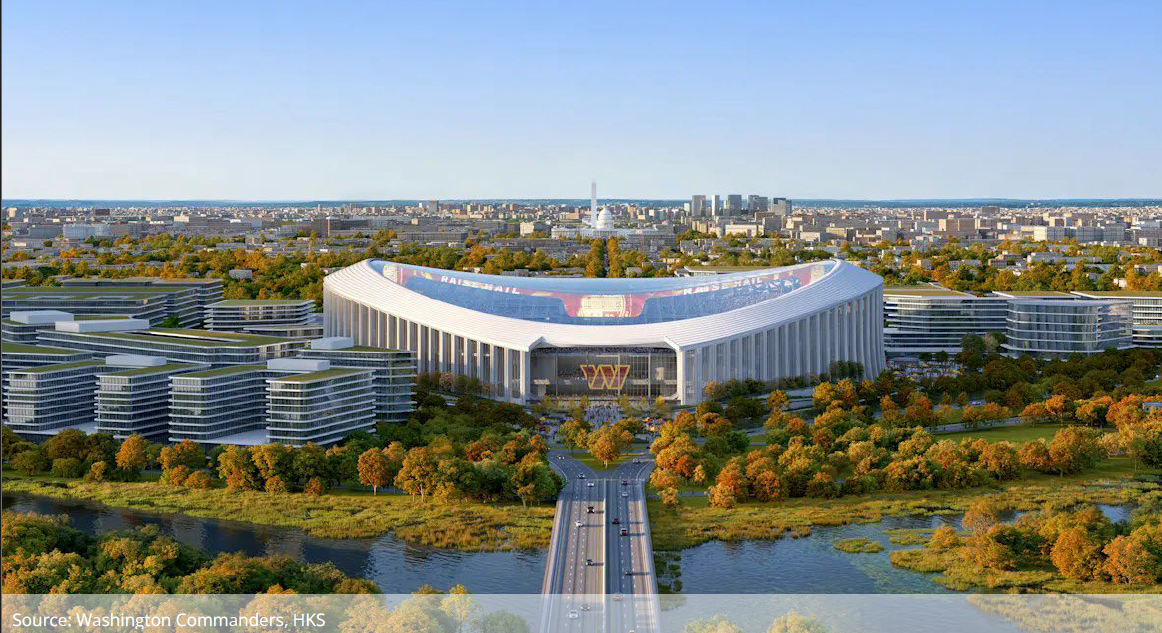
So as I watch this new Commanders Stadium slowly rise and then fill up with gameday fans, I will use the opportunity not only to cheer and be a part of a fan community, but also to observe and learn from the experience and social connections that it creates.