
Good Risk
The push to remove all risk may be flattening our experiences.
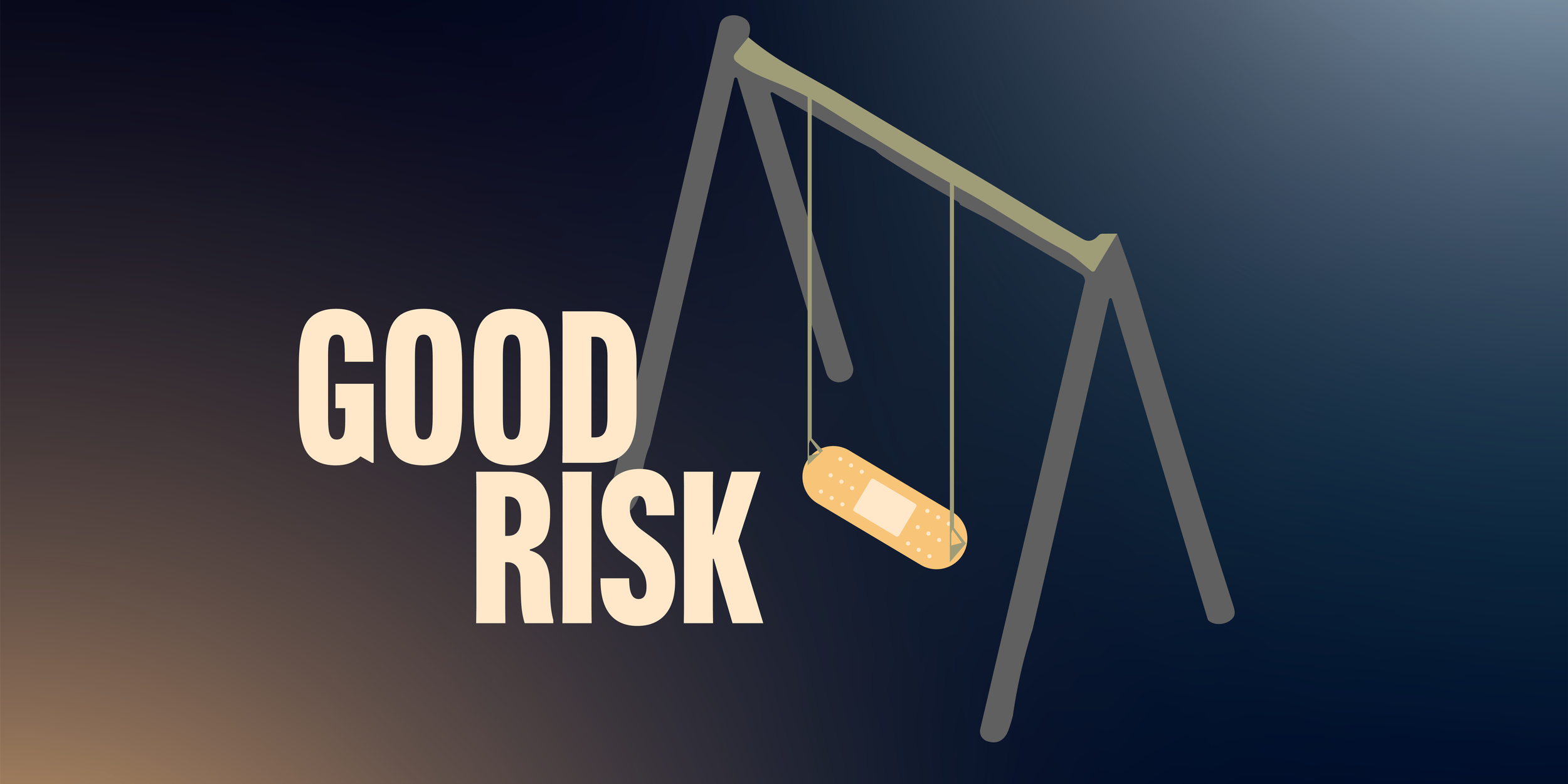
Coming out of the holiday break, I had the feeling that I spent most of my hours with my toddler focused on preventing him from causing major bodily harm to himself or those around him. While I have made more ER visits in his nearly three years than I had for the previous forty, overall, I think his mom and I have been pretty successful. That constant vigilance is exhausting. And maybe not wholly good.
Risk builds resilience for kids
It got me thinking about a point Jonathan Haidt makes in his book The Anxious Generation about the efforts to remove all risks from playgrounds. I spend a lot of time in these places, which are critical civic and public infrastructure, and they are indeed very safe. Gone are the natural wooden surfaces and fast metal slides that I remember from when I was a kid.
What our playgrounds reveal is a system of risk remediation. Through lawsuits, insurance, and regulation, we have become highly effective at removing visible physical risk, while largely ignoring the broader societal costs of doing so. Haidt challenges us to think more critically about what we are trying to protect children from, and what we might be taking away in the process.
“Just as the immune system must be exposed to germs, and trees must be exposed to wind, children require exposure to setbacks, failures, shocks, and stumbles in order to develop strength and self-reliance.” - Jonathan Haidt, The Coddling of the American Mind
Haidt’s simple but important point is that growth requires friction, which means risk. A critical element of childhood is learning to see and navigate risk, even when it leads to failure, scrapes, or bruises. The value of learning to navigate the risks of our world is much greater than an anodyne plastic play area that is harmless and boring, albeit brightly colored.
Alexandra Lange goes deeper in her CityLab essays on the value of “risky play” in children’s spaces. She argues that our spaces for children are riskless and further points out that we actually have no spaces built for teens, whose very existence seems to be about trying different risks. Lange’s deeper points is that we are designing childhood as something to be managed rather than explored, and adolescence as something to be avoided in public places altogether. As Haidt points, when these constraints are placed on the physical world while little risk is mediated online, children are only pushed further from real places into virtual networks.
The point Haidt and Lange make about playgrounds has other echoes in our cities. Through their lens, I began to notice other instances where the unbridled remediation of risk in our physical environment may be quietly taking away some of the best parts of our places. I offer three small examples.
When public health trained us to avoid each other
Our approach to the COVID-19 pandemic worked to reduce real health risks, but it also reshaped how we see the risk of public spaces. In closing schools and discouraging shared environments, institutions helped set a lasting expectation that proximity itself is dangerous. Even after the vaccine tempered the virus, many of the habits have stubbornly remained. There are quieter downtowns, fewer spontaneous encounters, and a retreat from unplanned overlap. The risk of infection declined, but our public places continue to pay a toll in lost vitality. It is hard to ignore how closely this has coincided with rising loneliness.
Safer cars, deadlier streets
Cars are far safer for their occupants than they were a generation ago, but that protection has not been shared evenly. Larger vehicles, higher hoods, and advanced safety features reduce risk for drivers while increasing danger for pedestrians and cyclists. By shifting harm from those inside cars onto the public realm, streets become riskier and less welcoming. People and businesses adjust accordingly, which usually means even more focus on cars. The result is a built environment that has optimized safety for car drivers and passengers while quietly degrading streets as places for people.
Virtual risk reduction flattens our third spaces
While the online world is virtual, its ability to magnify risks has quietly homogenized the physical one. Kyle Chayka coined the term “AirSpace” to describe the similar aesthetics of places across cities as platforms like Instagram, Yelp, and Google Maps allow consumers to see the space, read the reviews, and know exactly what they are getting before walking in. Coffee shops learn quickly what feels legible to the widest possible audience. In this world, deviating from “normal” with unusual color palettes, fun materials, or idiosyncratic vibes raises the risk of negative reviews or algorithmic invisibility. These flattened places no longer ask visitors to risk feeling out of place. In doing so, they have reduced the possibility that funky, unique and unusual places will be created or survive
Returning to my rambunctious kid, I have thought a lot about allowing for some level of risky play, even if it means more bumps and bruises. We have the same opportunity to consider how small risks make our places human, fun, and formative, even if that occasionally means bad experiences. Places that eliminate all risk may feel safer and easier to operate but they may also slowly make us, and our society, less dynamic, resilient, and human.